 Company's Financial Accounting
What are a Key Performance Indicators (KPI)?
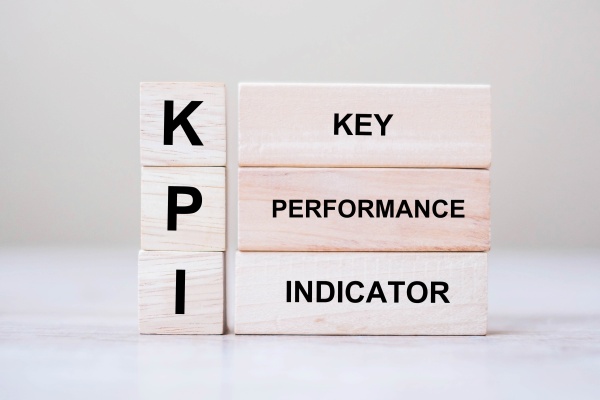
Definition: Key Performance Indicators or KPI (in Finnish, suorituskykymittarit, onnistumiset mittarit) is an important part of managing company plan on a continuous basis, which is used to measure an individual employee, department or the whole company progress in achieving key business objectives. Key performance indicators are measures that can be calculated and then used to measure obtained results.
What are Key Performance Indicators or KPIs used for?
Key performance indicators (KPIs) implementation allows to:
- evaluate the work of the entire company, its individual divisions and separate employees;
- compare homogeneous processes that take place in different conditions, as well as compare indicators for several departments for the same period;
- comparing and analyzing the results of the activities of separate departments or branches, it is possible to predict trends in business development as a whole;
- motivate employees;
- control and regulate fairness, transparency and comparability of results, which means the possibility to realize the comparison of the assessment results. Тhe management and employees of the company clearly understand how their compensation or bonus payments are formed;
- adjust the work of a concrete employee, in case of the lag in fulfilling planned targets;
- increase the interest of staff in the results of the company's activities and get personnel involved in achieving the goals of the enterprise;
- control the quality of the employee's duties fulfillment.
Motivation system based on key performance indicators (KPI)
Implementing and using KPIs helps companies to improve business performance as well as to gain a full and clear understanding of the flow of the business processes. This is due to the implementation of a well-marked system of performance criteria for managers and employees.
As a rule, KPIs are used by larger companies with a big number of employees and branches, since their use greatly simplifies the control over the performance of all departments. The use of key performance indicators allows to more competently manage the processes in the enterprise and make changes to them by setting goals for employees and motivate them to achieve these goals.
Thus, KPIs also serve as a motivation system for employees, where the stimulating factor is a compensation or bonus payment. The bonus can be paid to the employee, who successfully has fulfilled the assigned task in the particular period. The bonus may be a fixed amount or be expressed as a percentage of salary. The KPI motivation system stimulates the employee to promote the growth of both his individual results and collective performance and the achievement of strategic goals.
It is important that in order to achieve the common global goals of the company, it is necessary that all employees perform their duties efficiently for the common good. The system of employee motivation based on KPI helps to achieve this. So, productivity indicators allow the manager to objectively evaluate the work of each employee individually using specific numbers.
It is important to note that in order to be effective KPI should be based on so called S.M.A.R.T. objectives and goals, i.e. they should be: Specific, Measurable, Achievable, Relevant and Time-based.
Key Performance Indicators and Business metrics
KPIs are developed by the company's management. There are both generally accepted indicators, usually financial, and developed separately for a specific company. The good management plan typically includes several KPIs to track the progress in goals achievement.
There are a lot of different KPIs metrics and they are depending on the industry, department or individual's position, as well as organization’s goals and objectives. A Business Metric is a measure that is used to track and assess the progress of a different business processes, it can be in a form of number or ratio. There are different categories of business metrics, such as:
- Sales key performance indicators: Monthly sales volume, monthly sales growth, monthly new customers; number of monthly orders, average purchase/ order value etc.
- Financial key performance indicators: Net profit margin, current ratio, quick ratio, current accounts receivable, current accounts payable, accounts receivable turnover, inventory turnover, return on equity, working capital, net cash flow, earnings before interest and taxes (EBIT), contribution margin, gross profit margin etc.
- KPIs can also be for marketing, social media, call centers, retail, insurance, e-commerce etc.
How to choose key performance indicators KPIs?
There is a huge amount of KPIs by using which it is possible to track the company’s growth and development. And here the question arises, how to understand what kind of KPI elements your company should to use? The first steps you should to do in order to select the right KPIs:
- define the goals and objectives you want to achieve and track;
- think how the progress can be measured towards the setting goal;
- choose a key performance indicator, which better shows whether the company getting closer to the goal achieving and if there is some lag in progress.
When developing a KPI system, should be taken into account the requirements that apply to each of the indicators. Thus, Key Performance Indicators should to have four components:
- Measure. Define what and how you are going to measure.
- Target. Set a goal you would like to achieve, the desired value of your Measure, i.e. a numeric value. If the Measure is presented as a percentage, then the target should also be expressed as a percentage. If the measure is a number, the target must also be a number.
- Data Source. Define the source for data obtaining. It can be, for example, Google Analytics, Database, reports from previous periods etc.
- Frequency. Define how often you are going to pull the data and review KPI daily, weekly, monthly, quarterly, or yearly.
How to calculate key performance indicators KPIs?
Calculation of the key performance indicators:
- Choose a few key indicators;
- Determine the weight of the selected indicators, the total amount should be equal to one (1);
- The weight is distributed according to the importance of the indicators, i.e. the most important indicator will have the maximum weight;
- Make a plan based on the actual (available) data for each of the indicators;
- Calculate KPI, Examples of calculating key performance indicators KPIs can be found in the Excel template below (calculation with and without reference to the base data);
- Calculate bonus payments to employees based on the results obtained. You can see an Example of calculating premium and bonus payments in the Excel template below.
KPIs immensely important for the business, and if be successfully implemented, they will provide significant advantages in company management, as well as contribute to its growth.
Key Performance Indicators KPIs, free download template in Excel format
English, Russian and Finnish versions
| Name | File to download |
|---|---|
| Key performance indicators (KPI) and Bonus payments | СКАЧАТЬ БЕСПЛАТНО |
| Ключевые показатели эффективности (KPI) и Бонусные платежи | DOWNLOAD FREE |
| Suorituskykymittarit (KPI) ja Bonusmaksut | LATAA ILMAISEKSI |