The important thing to keep in mind when planning a business, is how management process is organized in your company. It is strictly
important how the organization is managed. Strategic management is a tool which can be used in order to make your company
even more successful, to earn more profit and increase the value of the company. This section describes the basic principles of business management, human resources management, the main problems and changes that the company may face, as well as factors that will determine the success of your company in the future.
Finland is a country with great opportunities!
Corporate social responsibility (CSR)
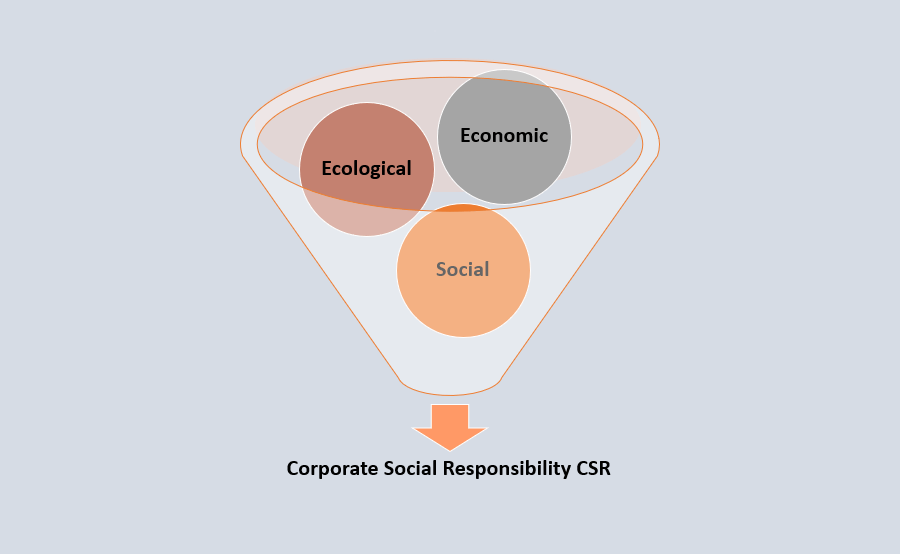
![Corporate social responsibility CSR]()
What is Corporate Social Responsibility?
Corporate social responsibility is usually divided into three parts:
- economic
- ecological
- social
Sustainable development, corporate social responsibility and the changing challenges of society have brought their own
contribution to the management and development of the company.
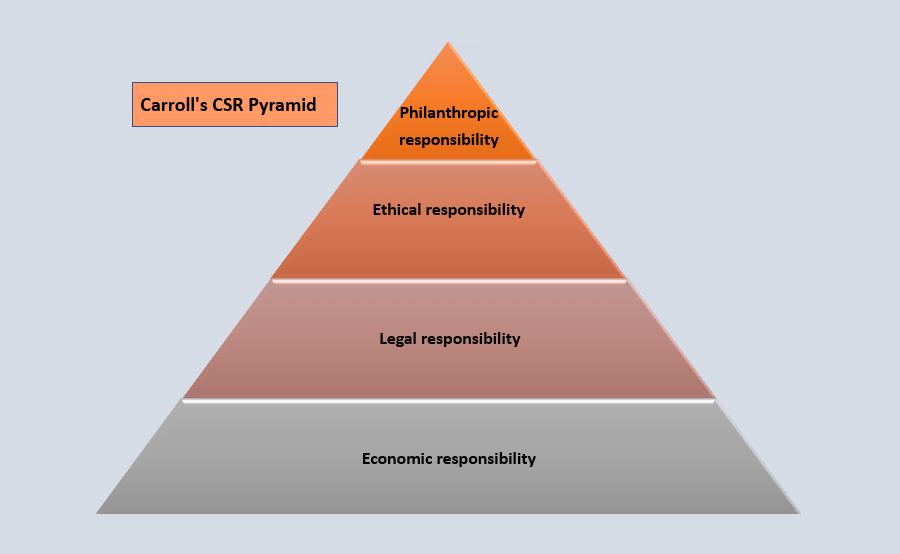
![Carroll's CSR Pyramid]()
Carroll's CSR Pyramid
Corporate Social Responsibility CSR Model or Carroll's CSR Pyramid "Corporate Social Responsibility" consists of:
Economic, Legal, Ethical and Humanitarian or Philanthropic responsibility.
- Economic responsibility - to be a profitable company, satisfying the needs of consumers
- Legal responsibility - comply the laws, law-abiding, compliance with legislation
- Ethical responsibility - social and environment, social compliance, be ethical, adherence to moral and ethical
principles and standards
- Humanitarian or Philanthropic responsibility - voluntary fulfillment of additional obligations to society, be a good
corporate citizen, improving social welfare and quality of life
In Europe, there are other similar terms alongside the "Corporate Social Responsibility, CSR" (in Finnish - yhteiskuntavastuu) term - corporate
responsibility, corporate sustainability, corporate citizenship, social responsibility and responsible business conduct (RBC). There is no generally accepted
definition of CSR. According to the definition of the European Commission , CSR means that companies
voluntarily incorporate social and environmental aspects into their business strategy in close cooperation with all their
stakeholders. The corporate responsibility or business responsibly means, for example, minimizing the negative environmental
impact that business may cause.
Social responsibility is also becoming an important aspect for small businesses. Responsible business for SMEs means а
business development using existing best practices so that it will be most beneficial for the business, as well as for its
internal and external investors and owners.
Characteristics of social responsibility:
- Responsible activity in the company
- Voluntary initiatives that go beyond legal and contractual requirements
- Activities that benefit workers and other stakeholders as well as the environment and society
- Positive impact on each target group while minimizing negative impacts on other groups (including environment)
- Regular or repeated actions, rather than accidental or singular events (responsibility as part of a business strategy,
not as a separate action)
- Some more information about Corporate Social Responsibility CSR at yrittajat.fi (in Finnish), Ministry of Economic Affairs and Employment (in English).
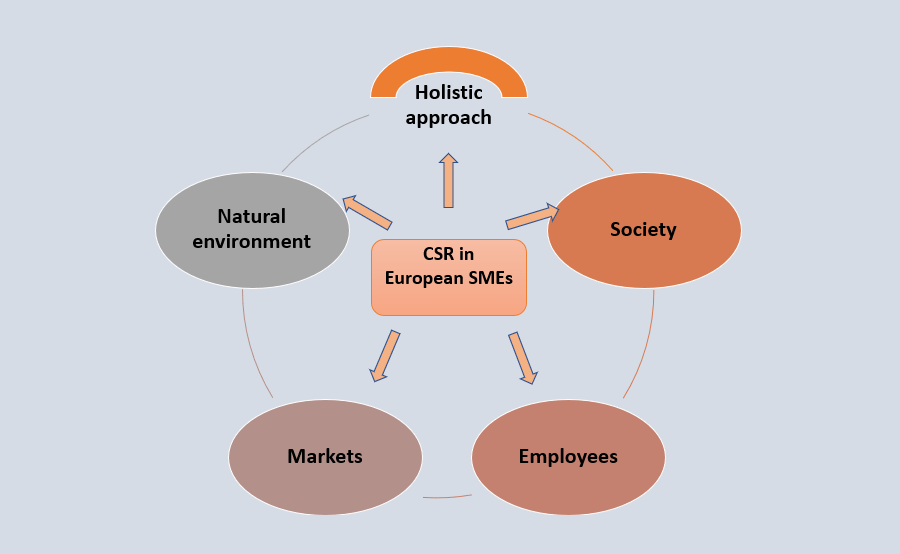
Responsible entrepreneurship. CSR in European SMEs
![CSR in European SMEs]()
Companies voluntarily include social and environmental issues into their business strategy and in relationships with the
stakeholders.
The impact of the corporate social responsibility (CSR) on the competitiveness of SMEs:
- Better products and / or production processes: improved customer satisfaction and loyalty
- More motivated and committed employees: creativity and innovation in the company
- Better public image: rewards and / or positive word-of-mouth
- Better position in the labor market, better networking opportunities with business partners and authorities, as well as
better access to public finance thanks to improved image
- Cost savings and increased profitability: more efficient use of human and productive resources
- Increased turnover / sales: improved competitiveness
Strategic management. Vision, mission and strategy
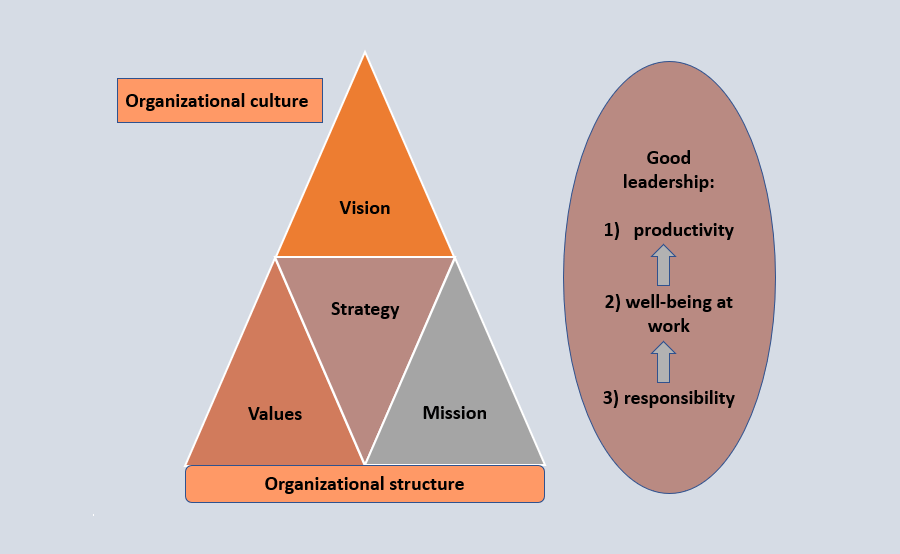
![Organizational culture. Vision, mission and strategy]()
The role of strategic management in effective and successful business development is enormous. The basis of strategic
business management is the development of a strategy and its further implementation. When developing a strategy, it is very
important to remember that a strategy should be coordinated within the company. It means that it is necessary to pay more
attention to the fact that the developed strategy is coordinated with the managers of the company which will then implement
it. In the strategy development should take an active part almost all the managers of the company (each within their area of
responsibility).
Strategic management is a process of management activities aimed at achieving the long-term goals and objectives of the company, taking into account the interaction of the organization with its environment, which allows it to achieve the desired results, in accordance with its internal capabilities and an effective action plan. The strategic planning process includes the formulation of the
mission, goals, objectives and action plan. In the strategy have to be defined the goals and described the activities, their
totality and the direction of achieving desired goals.
The strategic process is a set of management actions consisting in defining a strategic vision and mission of the company
as well as formation and implementation of the strategy.
Vision, Mission and Strategy
The organization must have a direction and a goal, i.e. a vision. What is our vision? The vision represents how will our
organization look like in 3, 5 to 10 years. where are we going? It explains and demonstrates what an organization is, what it
should become and what it seeks. Vision is the illustration or picture of the company's future. The vision also reflects the
view of the entrepreneur's own future. When seeking business financing, it is important that the company vision will be
inspiring, clear and convincing!
The organization must know what is its business and why it exists. Thus, mission shows the company's business idea, the
reason for its existence. The mission explains the essence of the activity and specifics of the business. It describes the
business and gives the answer for the questions: What the company wants to do permanently? What is the company main purpose? Where
the company wants to go and what to achieve in the long-term? Mission characterizes only the “present” of the organization:
the type, scale of activity, differences from competitors etc. Mission is a statement, which defines and describes the role
that a company plays in a global society. The mission, together with the values and vision, is a factor in defining the
company's strategy. It is one of the key elements of the business strategy on which the strategic plan is built.
There are values and principles on basis of which all company operates. These are the things and principles that are
considered important in the organization and by which the company is guided when making choices. There are values in every
organization and company, even if they were not mentioned in public. Each person also has his own internal values. It is
preferable to work out the company's values together with all employees: consider thoroughly, write down and discuss, what
they mean in their daily work.
Values can:
- facilitate close collaboration in the workplace
- ensure that decisions are made in accordance with common goals
Goals is the final desired result, which seeks to achieve every organization. Goals must be realistic!
The organization should determine how it will accomplish its mission and achieve its vision, i.e. develop a strategy.
Strategy is our way to the successful results!
Leadership and management
What does leadership and management mean? Leadership and management are two different things. These concepts have
fundamentally different social, political and psychological meanings. Management can be defined as activity, the purpose of
which is to perform the prescribed actions and the solution of certain tasks; whereas the leadership is the process by which
one person influences another person or group.
Manager is a person who supervises the work of employees, has the rights and authority to manage a team and is personally
responsible for the results of its activities.
Leadership is an important part of management process and it means different things in different situations. Leadership is
the individual's ability to exert a decisive influence on other people, to organize and direct their actions. Leader inspires
employees. It is a person who is responsible for decisions affecting interests of others and determining the direction and
nature of the activities of the whole team. The basis of such a relationship between leader and employees is always a
trust.
Leadership vs. Management in few words
Management
- planning
- organizing
- leading
- staffing
- controlling
- delegates authority and responsibility
- reactive
- written communications
- maintain
- concentrate attention on systems and structure
- main questions: How and when
Leadership
- acting as a leader
- teamwork
- innovation
- inspiring
- motivating
- encouraging
- listening
- trust
- build relationships
- proactive
- verbal communications
- develop
- concentrate attention on people
- main questions: What and why
«Management is doing things right; leadership is doing the right things» Peter Drucker
«Management is efficiency in climbing the ladder of success; leadership determines whether the ladder is leaning
against the right wall» Stephen Covey
«Effective leadership is putting first things first. Effective management is discipline, carrying it out» Stephen
Covey
Leadership
1. How is the leadership born and developed? Is the leader born or made?
“The most dangerous leadership myth is that leaders are born-that there is a genetic factor to leadership. This
myth asserts that people simply either have certain charismatic qualities or not. That's nonsense; in fact, the opposite is
true. Leaders are made rather than born. “Warren Bennis
2. How is leadership created?
- Leadership must be earned, for example: at organizational level, at managerial level or from colleagues
- There must be a desire to lead: willingness to take responsibility, ability to use power properly
- Must have the ability to lead: knowledge, skills, abilities etc.
“Charisma becomes the undoing of leaders. It makes them inflexible, convinced of their own infallibility, unable to
change.” Peter F. Drucker
3. The role of the leader
- Represents the interests of the organization and exercises of the powers conferred upon him/her
- Knows, understands and upholds the interests of the organization
- Understands who set the tasks and who is the power, from whom responsibility comes and who will pay wages
- Works as a "buffer / filter" between staff, organization management and external stakeholders
- Maintains and develops the functional management system
- Leads people, manages tasks, work with stakeholders, organizes development work
4. What kind of features/characteristics/qualities does a good leader have?
- genuine / authentic, real
- open
- honest
- reliable
- exemplary
- anticipatory
- consistent
- fair, impartial
- quiet, peaceful
- responsible
- loyal
- approachable
- self-restrained
- skilled
- humane
- speaking
- listening and hearing
- visible
- making decisions
5. New leadership practices:
- Couching is a process of helping people or groups of people to act more effectively, to achieve their goals and results
in his professional and personal life, it helps to stimulate creative thought. This is the creation of such environment
that facilitates movement towards the desired goals. The coach will look for answers to questions together with you, he
helps to formulate answers and solutions.
- Mentorship is the process of individual staff training, carried out by more experienced and competent staff. It means transferring experience, the exchange and dissemination of knowledge.
- Empowerment - giving the employee the right to make management decisions in his area of competence. This is one of the
ways to improve management efficiency.
6. What we expect from leader?
The task of the leader is to ensure the workplace infrastructure improving and to guide the team towards a common
objectives and goals.
"Good leaders make people feel that they're at the very heart of things, not at the periphery. " Warren
Bennis
Management. Management objective
One of the important goals of management is to combine the goals of the organization and the personal goals of the
employee.
Self-management
It is very essential that you can manage yourself well. If you are able managing yourself effectively, then you definitely
are able to manage your team and can lead it to better results. Ask yourself:
- What about me? How well do I know and understand myself?
- Who and what I am?
- Who and what I want to be?
- How well do others know and understand me?
The aim is to be aware in managing your own well-being, self-realization, beliefs and reactions. It means also
self-control, your ability to manage and organize time.
Important cornerstones of self-management
- The importance of self-awareness, self-knowledge, self-esteem and self-confidence and their development
- Maintaining personal well-being
- Reflecting your own values and attitudes, interpersonal skills
- Identifying your own emotional reactions and developing emotional intelligence
- Identifying and using your own personality and temperament
- Stress management and increased flexibility
- Creativity as a resource
- Managing your work and time
- Task prioritization
- Purpose and motivation
- Defining and developing your own professional identity and career vision
- Maintaining professional networks, mentoring, job guidance
Self-management
A competent manager with a self-awareness. A self-aware or self-knowledgeable manager and successful, effective
leader:
- is able to evaluate and analyze its own activities in the work community in terms of individual and managerial
work
- extends and develops its self-knowledge
- understands self-management and self-development as an ongoing task of the entire career
- is constantly striving to grow as a leader and develop leadership skills
- manages various methods to promote and maintain its own well-being
- is able to plan his own work and manage his time
- is capable to act reflective, willing to reflect and re-act effectively
Management of the organization. Organizational structures
![Organizational culture. The Iceberg Model]()
The structure shows how people in a company are organized in accordance with the tasks they are responsible for, in order
to achieve their goals.
- into what kind of groups, the tasks are divided. How the tasks are divided into groups/parts/categories /separate jobs/
across the team/departments according to the aim, to the required completion time, to their complexity etc.
- who, where and for what is responsible, with whom you share responsibility, under whose guidance you work and to whom
services?
Organizational culture. The Iceberg Model
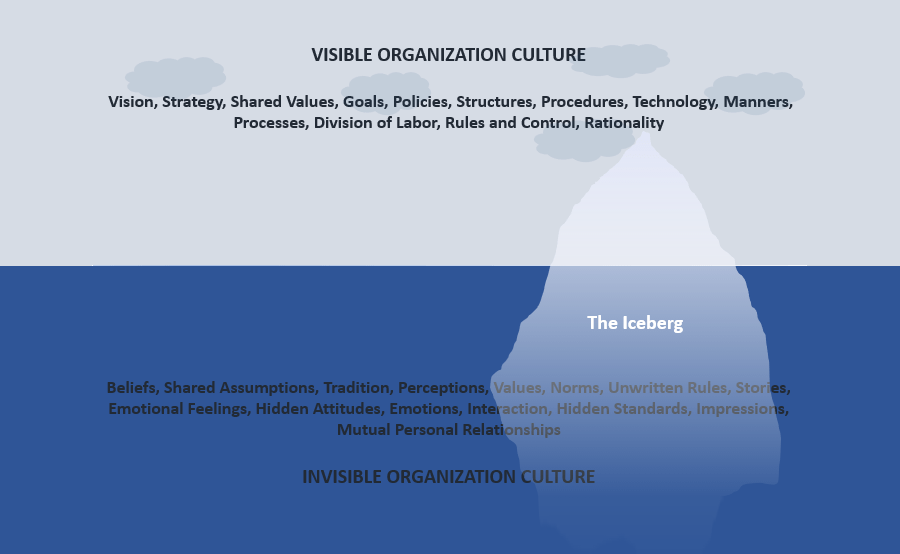
The point of the Iceberg model is that the majority of managers, as a rule, only pay attention to the visible part of the
organization, and forget about the management parameters that are hidden. As known, we usually see only the tip of the
iceberg, i.e. very small part above the water. If we will pay attention just to the visible parameters of the functioning of
the enterprise, we will achieve only superficial results.
- Visible- vision, strategy, shared values, goals, policies, structures, procedures, technology, manners, processes,
division of labor, rules and control, rationality
- Invisible- beliefs, shared assumptions, tradition, perceptions, values, norms, unwritten rules, stories, emotional
feelings, hidden attitudes, emotions, interaction, hidden standards, impressions, mutual personal relationships
What do employees expect from their workplace?
- Workplace equality and justice
- A fair remuneration/fair wages / fair salary policy and payments
- Have a sense of purpose in their work
- Clear goals
- Everyone has the opportunity to participate and influence organization's goals, objectives creation and achievement as
well as the development of company's activities
- An open and harmonious workplace atmosphere that inspire confidence
- Employees are given sufficient information
- Good working conditions and access to all necessary tools
- Opportunity to combine work and private life
Management of the organization. Challenges and changes in management of the company
The main challenges and changes that businesses face today:
- Internationalization
- Information technology
- Network expanding
- Organizational changes
- Sharing responsibility
- The focus of the work content on interaction, expertise and thinking
- Changes in the age structure of the work community
- Changes in the nature of the employment relationship
- Multiprofessionality and multi-professionalism etc.
Successful organization
- Managing organizations focused on success, prosperity and sustainable development nowadays is more challenging than
before.
- Accelerated globalization of the market, competition and technological development are forcing work communities to go
with the time and to keep up with changes.
Factors that will determine your company's future success:
- well-being of the company and the staff
- continuous learning, training, regularly upgrading the skills and increasing the knowledge
- development through innovation
- an organizational structure that flexibly adjusts its operations to changes in the operating environment
The central factors that determine a workplace as healthy and well-functioning
The key characteristics and features of innovative and developing working communities:
- Setting clear goals and objectives for the work and its development
- Objectives guide actions, focus efforts on the main things and promote new ideas
- A positive and open atmosphere encourages the team members to take an active part in working processes
- Employees' personal work performance and team activities are appreciated at its true value
- The responsibility of individual members of a team and the group as a whole works properly
- The constructive disagreements arise from the desire to find the highest quality solutions
- Time is spent on development
Good working community:
- rewards employees and provides resources
- employees are committed to the workplace/an organization
- employees job satisfaction is at a high level
- there is a very little absenteeism at a workplace and a low stuff turnover
- the rules are agreed and followed upon
- clear division of labor leads to the quality work performance and customers' satisfaction
- problem solving skills are refined
- working methods are solution-oriented and forward-looking
- organization´s capabilities to manage changes / organizational readiness for change
Human Resource Management
![Human resource management as part of business strategy]()
Human Resource Management as part of the business strategy
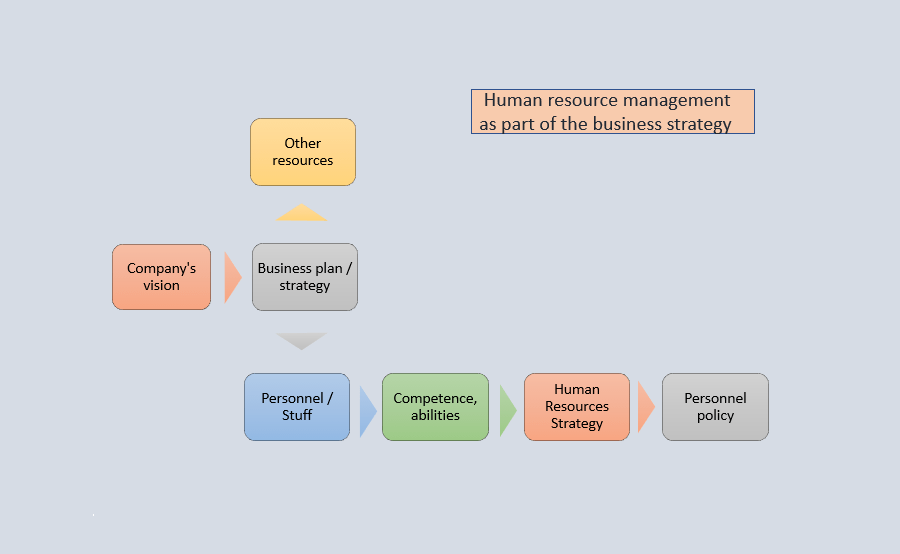
The management of human resources in a company can be carried out effectively only if there is a clear HR strategy and its
strong relationship with the main business strategy of the organization. Any successful entrepreneur understands the need of
human capital for the goals’ achievement and business success. The human management strategy is an integral part of the
company's overall business strategy; it determines HR management priorities, the strategy and policy of personnel resource
management.
![Personnel stuff]()
Personnel or stuff
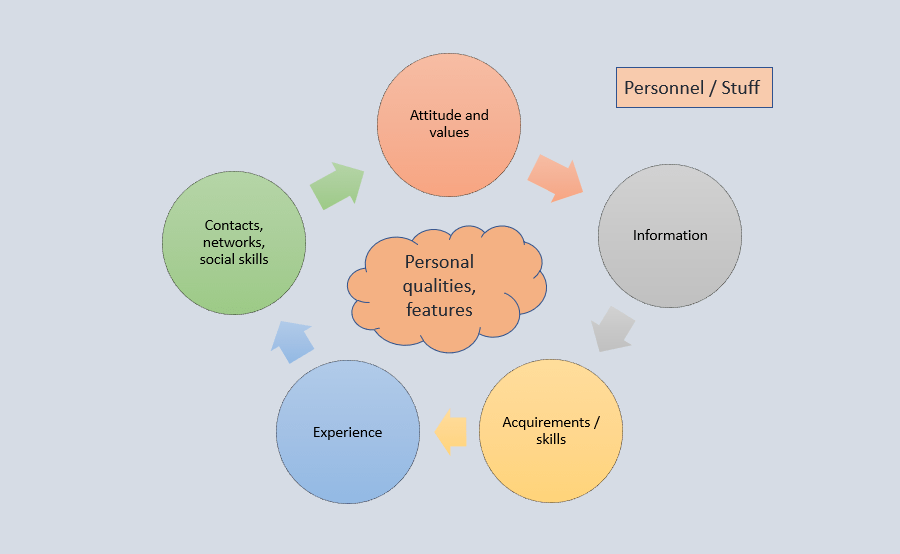
What kind of staff are there in the organization? What does your future employees look like? Describe the personal
qualities, skills and features. Using received analytic data, you can better understand your employees and make more
efficient strategic decisions.
Human resource management primarily means managing the people working in a company (in other words staff or personnel).
Employees are perceived as an enterprise resource, which can be used for quickly and efficiently achievement of corporate
goals, as well as for solving current and global tasks of an organization.
Principles of personnel management:
- Manager's self-knowledge, readiness and abilities
- Understanding the essence / the point (of the matters, the problems)
- Hearing, listening and understanding of the staff
- Targeting and communication capability
- Ability to manage a diverse stuff / team
- Level of proficiency, professionalism - Leadership
- Taking the future into account
- Respect for people
- Maintaining working ability
- Remuneration, rewards
Functions of Human Resource Management:
- Human Resources Planning
- Personnel / stuff recruitment, selection
- Orientation, familiarization / acquaintance with the work, work guide
- Knowledge development
- Performance monitoring, evaluation and remuneration
- Promoting well-being at work
- Dismissal and reassignment to the position
- Daily management
- Human Resources Strategy = > Vision
Human Resources Planning. Strategy. Strategic plan
The HR department controls the work of the stuff and performs a number of functions, including the development of a
personnel strategy. The HR strategy defines quantitative and structural human resources as well as stuff competences and
well-being. HR strategy is an effective tool for developing of every company, which is usually based on the main business
strategy of the company. It is great tool for the successful implementation of the mission and declared goals of the
business.
A long-term plan shows how the organization intends to ensure that the chosen business strategy is implemented and
developed by the personnel.
Human Resources Planning includes:
- Forecasting (volume, structure, the level of knowledge, costs)
- Predicted workforce recruitment / selection plan
- Learning and knowledge development plan
- Engagement Plan - sitouttamissuunnitelma
- Plan for using the "flexible" labor / Action plan for labor flexibility
- Remunerations plan / compensation schemes
- Human resources reduction plan
- Staff hire plan / recruitment plan
- Knowledge transfer plan when employees leave the organization or retire
- Welfare promotion plan
- Human resource management development plan
Personnel strategy and policy
Personnel strategy is implemented through human resources policy. The staff is the main and most valuable strategic
resource of any enterprise. The purpose of the personnel policy is to provide to the company with the staff that has all
necessary qualifications.
Personnel policy is a set of rules, norms, principles and methods which determines the direction of the company in relation
to the personnel work. The personnel police are implemented on a basis of written instructions and work models formed through
practice.
Personnel policy:
- recruitment policy
- education policy
- wage policy
The main areas of the personnel policy can be:
- forecasting staffing needs
- forecasting staff training needs
- participation in the development of effective wage systems
- usage of modern systems of evaluation and selection of personnel
- development of different systems and motivational mechanisms to increase job satisfaction and interest
- creation and implementation of the staff knowledge development programs
- development different social programs
- management of innovations in personnel work
- ensuring a high level of quality of work
- ensuring the safety and health of personnel
- development of projects to improve the management of the company’s personnel
- etc.
Employee selection criteria:
- education
- training
- work experience
- specific skills
- abilities
- physical preconditions
- attitudes
- interests
- personality characteristics
- conditions, circumstances
- recruitment strategy: employer's image; forms, channels; internal, external
Task-specific criteria:
- What kind of company, organizational culture does you hiring the staff for? Vision? Business Strategy?
- Task content requirements, positioning in the organization?
- Possible changes in work tasks in the future?
- What kind of knowledge are needed?
- What kind of task-specific experience, company and industry specific skills are essential at a concrete workplace?
- Attitude, personality for the work community?
- Salary and other benefits?
- How long period do you hire an employee for? full-time and part-time?
- Familiarization with the office, the job responsibilities, co-workers etc.
- Who is involved in the employee selection process?
- Is there a suitable person within the organization for this work?
Manager functions and tasks
![Leadership styles or management styles]()
In each company should be a person who is responsible for any issues in the enterprise - manager / head. This is the
person who managing the company, based on his experience, knowledge and skills, as well as responsible for the development
of the enterprise. All managers perform certain functions.
The main responsibilities and tasks of effective manager:
- Working as an employee's coach: team building and coaching
- Assigning responsibilities, receiving and setting the tasks
- Tasks distribution and implementation
- Ensuring interaction
- Building relationships
- Starting and maintaining of the business activities
- Managing and directing of the business activities
- Performance audit
What is expected from the manager? You can ask yourself for these questions, consider about them:
- Who are you and where do you come from?
- Where are you going to lead?
- What is expected from you?
- Can people trust you?
Leadership styles or management styles
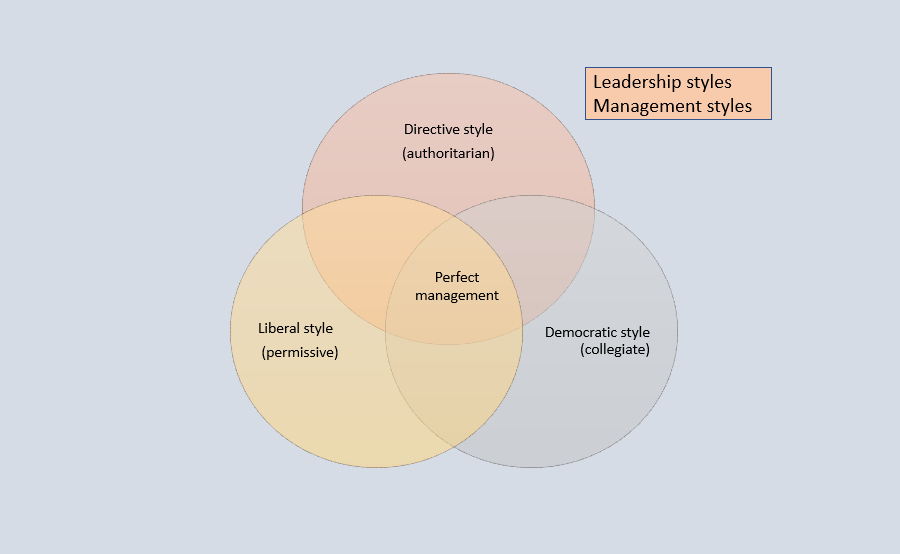
Management style is a method of influence of the manager on subordinates, the manner of behaviour in relation to
employees. There are several management styles. The most popular are the following (picture above):
- Directive style (authoritarian, coercive)
- Democratic style (collegiate)
- Liberal style (permissive)
Interaction - communication with colleagues and employee motivation
Effective communication
Successful management and leadership are invariably associated with the ability of a person to effectively interact with
colleagues, employees, subordinates and other managers. The effectiveness of communications is often determined by the
implementation of quality decisions.
Effective communication is:
- Voluntary information sharing
- Exchange of ideas, facts, opinions
- Expressing thoughts, emotions and feelings constructively
- Consistent action and communication on both positive and negative issues
- Accuracy, punctuality
- Hearing and listening, because good communication is a two-way process
- Attentive attitude and respect for differences
The manager's ability to communicate effectively will help to avoid possible misunderstandings and conflicts in the future
and build good relationships with customers, partners and the team. The success of a leader depends largely on his ability to
effectively communicate.
Motivation
Motivation is, first of all, the creation of such working conditions that will encourage the employee to perform the
duties and functions properly and to achieve the goals set.
Increasing employee motivation is possible not only by raising wages. A good leader is able to motivate through
goal-setting that will be desirable and understandable to employees, since the mere raising of salary is not always a
reliable tool for increasing motivation.
How the leader can motivate employees? How to increase staff motivation?:
- To increase the meaningfulness or relevance of work - appropriate work tasks
- To offer more interesting, challenging work - goal-oriented action
- To make best use of personnel's skills, knowledge and ambition
- Continuous professional improvement and development of staff abilities
Business plan section: Management. Leadership and manager's work
![Management guidelines]()
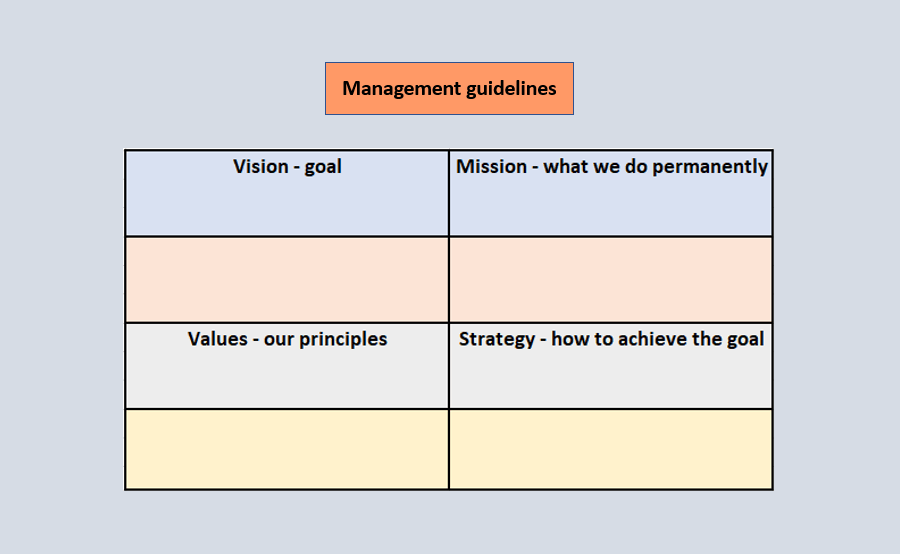
- Define vision, mission and values of your organization. Determine your business strategy. Briefly describe what kind of
manager you would like to be. Write above-mentioned issues concerning vision, mission, values
and strategy to the following slide --->>>
- Describe your management style.
- What kind of specific features, characteristics lead to a leadership?
Please note in your answer, customer relationships, expertise, workplace and personnel competence development, networks, multiprofessionalism, finance, well-being
at work, organizational change, etc.
- You can consider and evaluate your own role as a leader.
- What are your strengths and potential development targets?
- How do you lead yourself?
- How do you develop your skills?
- What kind of support network do you have?
- What kind of support do you need to develop yourself? Etc.