7 Reasons Why People Become Entrepreneurs
 Starting a business in Finland

Becoming an entrepreneur is not limited to people with certain inborn qualities. Entrepreneurial skills can be developed through knowledge, practical experience and the right competencies.
If you are considering starting your own business, it is important to first understand what entrepreneurship involves, what responsibilities it entails and which qualities can help you run a business successfully.
This article explains what entrepreneurship is, which qualities can help an entrepreneur succeed, why people choose an entrepreneurial path and what is needed to start a business.
A company is an organization that carries out business and entrepreneurial activities. It may produce goods, provide services or perform work for customers.
A company organizes its activities, manages resources and business processes, interacts with customers and other market participants, and is responsible for the results of its activities in accordance with legislation.
For a commercial company, important goals include economic efficiency and generating profit for its owners.
Entrepreneurship is an independent activity involving the creation, organization and development of a business. An entrepreneur offers goods, services or work to customers for compensation and makes the related decisions independently.
An entrepreneur is responsible for the results of their activities, including organizing work, managing costs and revenues, and maintaining business profitability. Entrepreneurial activity also involves certain risks that the entrepreneur takes on.
Entrepreneurship gives people the opportunity to organize their professional activities independently and make decisions about business development, but it also requires responsibility, initiative and a willingness to accept the consequences of those decisions.
In other words, a company is an organization through which entrepreneurial activity can be carried out, while entrepreneurship is the activity of creating, organizing and developing a business.
Success in entrepreneurship can mean different things. For one person, it may mean realizing their own idea; for another, building a profitable and sustainable business, gaining professional independence or having the freedom to choose the direction of their work.
However, a good idea or professional knowledge alone is not enough. An entrepreneur needs to be able to make decisions, deal with uncertainty, organize work and interact with people.
In practice, an entrepreneur combines several roles at the same time. They need to understand who their business serves and what value the customer receives, be able to organize work processes and make decisions, and also monitor financial results and the risks associated with their activities.
These skills are especially important because the entrepreneur is responsible for the development of their business. They must not only plan and make decisions, but also respond to changes, solve emerging problems and continually adapt to new conditions.
There is no single set of qualities that automatically makes someone a successful entrepreneur. Many of the necessary skills develop through experience, education and practice. Therefore, lacking a particular quality at the beginning of an entrepreneurial journey does not mean that a person cannot become a good entrepreneur.
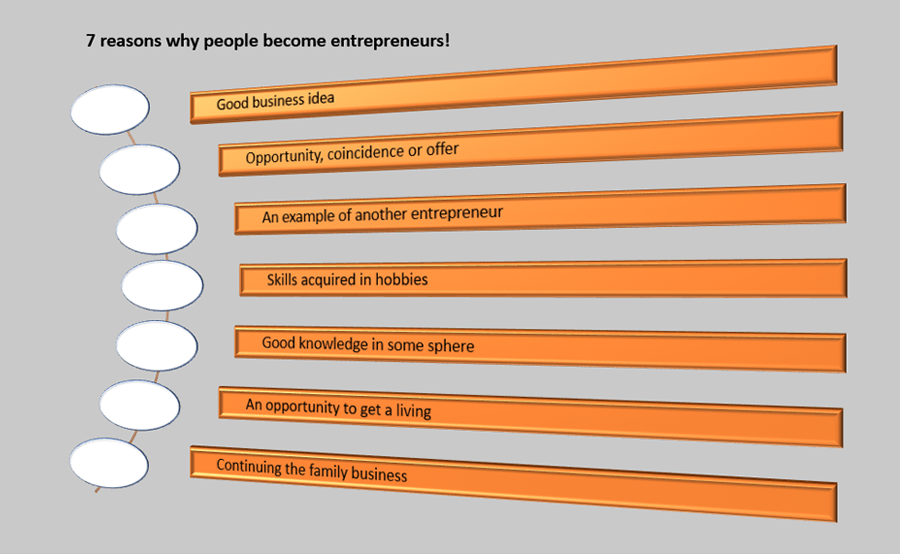
People choose entrepreneurship for different reasons. For some, the starting point is their own business idea; for others, it is their professional knowledge and experience. Sometimes the decision to start a business is connected with an opportunity, personal circumstances or a desire to change their professional life.
The reasons may differ, but in many cases entrepreneurship allows people to use their knowledge and skills, realize their own ideas and choose the direction of their professional activity.
7 Reasons Why People Become Entrepreneurs
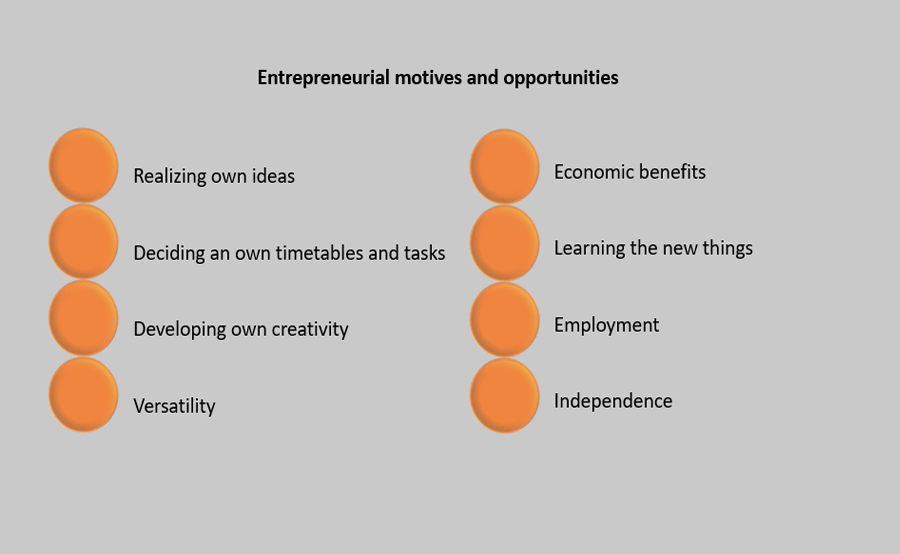
Entrepreneurial Motives and Opportunities
These reasons do not necessarily exist separately. For example, professional knowledge may lead to a business idea, while the desire to work independently may become an additional motivation to pursue it.
Entrepreneurship can offer more than an opportunity to earn an income. For many people, independence, the ability to realize their own ideas, develop professional skills and choose the direction of their work are also important.
Entrepreneurship can also be a way to create your own employment and determine the format of your professional activity.
However, entrepreneurial independence does not mean an absence of limitations or responsibility. The freedom to make decisions independently also means being responsible for the results, managing resources and taking business risks into account.
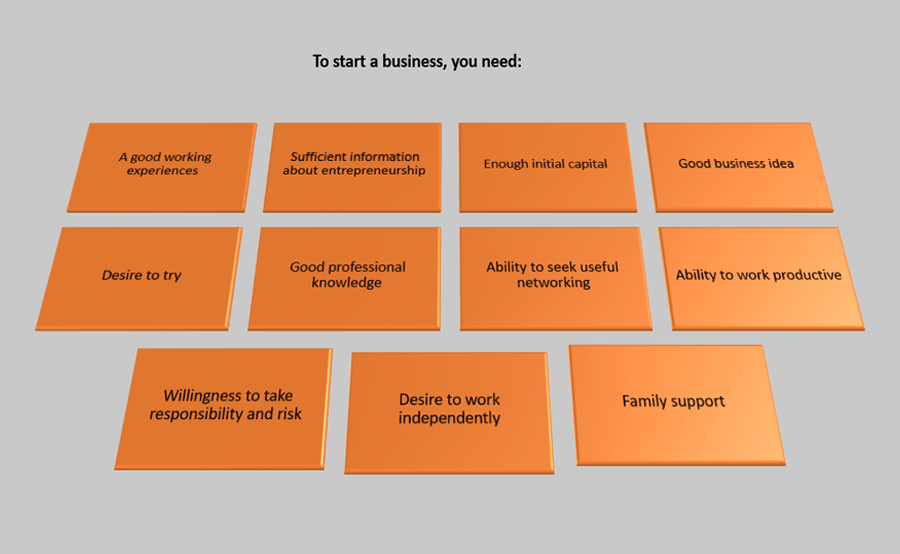
Starting your own business requires more than a good idea; it also requires preparation. An entrepreneur needs to assess their knowledge, experience, resources and readiness to organize work independently and make business-related decisions.
Before starting operations, it is useful to identify what is already available and which knowledge, skills or resources still need to be acquired.
Requirements for resources and preparation can differ significantly depending on the type of business. In some cases, professional experience and knowledge are especially important; in others, initial capital, business contacts or specific skills may be more important. In any case, an entrepreneur should be ready to organize their work independently, make decisions and take responsibility for their consequences.
Knowledge and experience. Professional competence and practical experience help you better understand the chosen field and customer needs.
Business idea. To start a business, you need to understand what product or service you will offer customers and what need it will meet.
Resources. Depending on the type of activity, you may need financial resources, time, equipment, premises, business contacts and other resources.
Readiness to work independently. An entrepreneur needs to organize their activities independently, make decisions and take responsibility for the results of the business.
Willingness to develop. You do not need to have all the necessary knowledge and skills before starting a business. Many can be acquired during preparation and through further work.
After an initial assessment of what you have available, you can move on to developing the business idea and planning the future business. It is important to define the product or service, potential customers, market and competitors, assess the financial aspects and prepare a business plan.
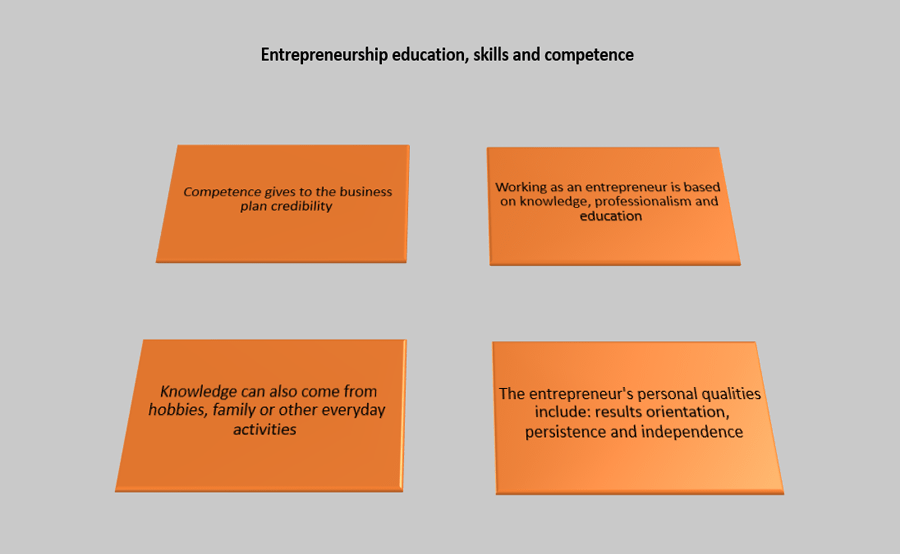
Entrepreneurial knowledge and skills develop gradually. Successful business management requires not only education and professional training, but also practical experience, the ability to apply knowledge in practice and a willingness to keep learning.
An entrepreneur can gain useful knowledge in many ways: through education and professional training, work, personal projects, hobbies, family experience and everyday activities.
The knowledge gained helps entrepreneurs better understand business activities and make more informed decisions. Practical experience, in turn, helps develop skills in planning, organizing work, communicating with customers and solving emerging problems.
Developing personal qualities is also important. Independence, persistence and a results-oriented approach help an entrepreneur work steadily towards their goals and deal with difficulties.
Entrepreneurial learning does not end when the business is launched. Changes in the market, customer needs and working conditions require entrepreneurs to continually update their knowledge and develop new skills.
Becoming an entrepreneur is not only about opening a company or starting to sell a product or service. Entrepreneurship requires independence, responsibility, a willingness to make decisions and a commitment to continually develop your knowledge and skills.
You do not need to have all the necessary qualities and competencies from the beginning. Entrepreneurial experience develops gradually through education, work, practice and solving real-life tasks.
If you decide to move forward, the next step is to develop your business idea and plan the future business. Preparing everything from the idea to the business plan helps structure your concept, assess its potential and define the next steps.
For more information about preparing a business — from developing an idea to preparing a business plan — see the article “Starting a Business: From Idea to Business Plan”.