Stakeholders and Stakeholder Analysis

A company does not operate in a vacuum. Its activities are influenced by people, other organizations, legislation, culture and other factors in the external environment. At the same time, the company has its own resources, plans and capabilities that determine its internal environment.
Understanding the company's environment and the stakeholders connected with it helps take external conditions and interaction with different groups into account when planning and developing the business.
The Company's Environment: Internal and External Factors
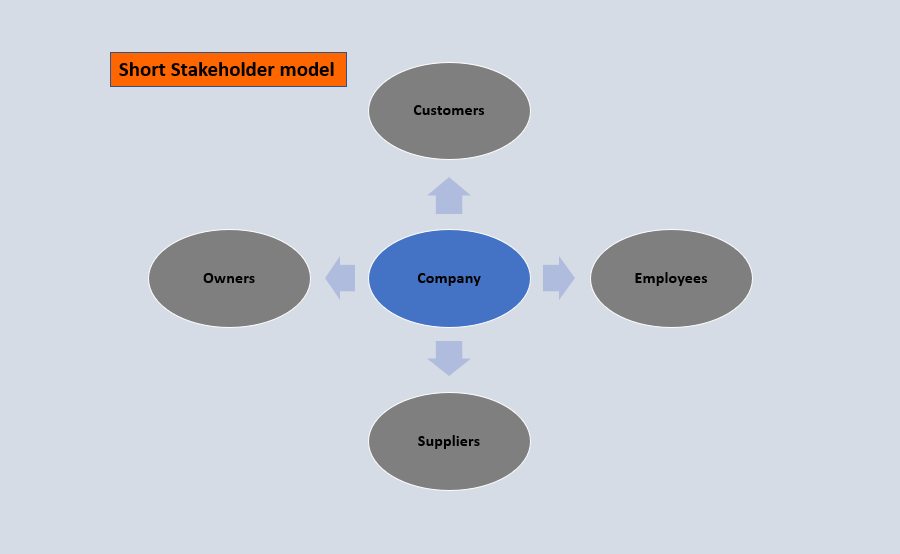
![Simplified Stakeholder Model]()
A company does not operate in isolation. Its activities are influenced by various internal and external factors that need to be considered when planning the business.
The external environment includes people, other companies, geographical and social factors that the company cannot ignore. They can influence the organization's activities and the conditions in which it operates.
The internal environment is connected with the company's own plans, influence, resources and competitive advantages. These factors determine the company's capabilities and its ability to develop.
The Company's Micro- and Macro-Environment
![Standard Stakeholder Model]()
Standard Stakeholder Model. Micro- and Macro-Environment
The external environment influences the company's activities. Every organization exists within both a micro- and macro-environment. Therefore, management needs to understand the company's internal and external environment, the changes taking place within it, and the organization's position in this environment.
The micro-environment is the company's immediate environment: people, competitors and other factors directly connected with its activities.
![Extended Stakeholder Model]()
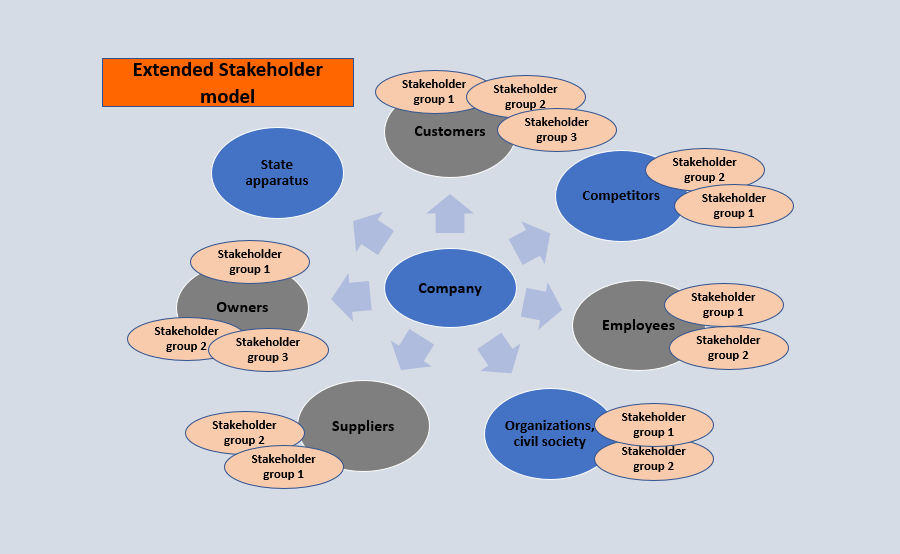
Extended Stakeholder Model. Public and Governmental Authority, Culture
The macro-environment includes the broader conditions in which a company operates. These include culture, legislation, and the activities of public and governmental authorities.
Legislation regulates various aspects of business activity. In Finland, there are requirements concerning working hours and marketing activities, rules governing the sale of certain products, and special requirements for knowledge, hygiene, work clothing and professional training in some fields.
Culture also influences consumer behaviour and business activities. The cultural environment can have a significant impact on everyday life and consumer habits. In Finland, for example, nature, sauna and child protection are important shared values.
Stakeholders and Partnership
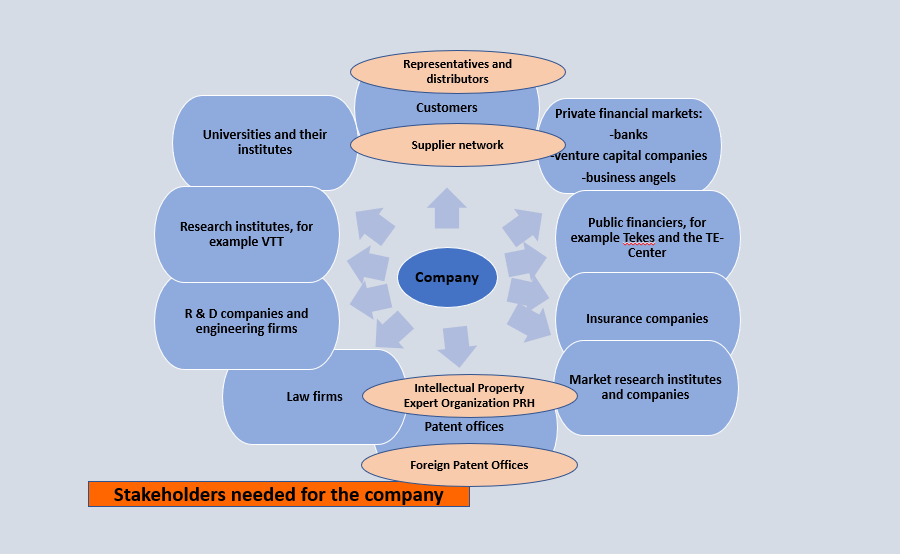
![Stakeholders Needed for the Company]()
Stakeholders are all parties with whom an organization interacts and who can influence its existence and activities. They may be located both inside and outside the company.
A company cannot operate without interacting with different people and organizations. Therefore, when planning a business, it is important to understand who is connected with the company's activities, what relationships need to be maintained with these parties, and what significance they have for the business.
Partnership and cooperation involve long-term interaction between organizations aimed at achieving common goals. For a company, it is important to identify which partners are necessary for its activities and what role cooperation with them plays.
The interests of different stakeholders may vary and sometimes conflict with each other. For example, company owners may seek to increase profits, while employees may be interested in higher wages and better working conditions. Customers may expect lower prices, while suppliers are interested in higher prices for their products or services. Therefore, the analysis should take possible conflicts of interest and their impact on the company's activities into account.
Stakeholder Analysis in the Business Plan
The business plan should include an analysis of the company's stakeholders and describe the main groups connected with its activities. It is important not only to list the stakeholders, but also to explain their significance for the company and the nature of the interaction with them.
For easier analysis, stakeholders can be grouped according to their level of influence on the company and their level of interest in its activities. This helps determine which parties require particularly close interaction.
Who are the main stakeholders of your company?
Identify the people and organizations that are connected with the company's activities or can influence its existence and development.
Which of them belong to the internal environment, and which to the external?
Divide the main groups into internal and external factors. This helps clarify the company's environment and the conditions in which it operates.
How is each of the main stakeholders connected with the company's activities?
Describe the role of each stakeholder and the nature of the interaction with the company.
How can stakeholders influence the company's activities or development?
Indicate how interaction with different parties can affect the company's operations, opportunities and development.
Which partners and forms of cooperation are necessary for the company?
Identify the organizations and partners whose cooperation is necessary to achieve the company's goals, and explain the importance of this cooperation.
Which external factors need to be taken into account?
Consider external conditions that the company cannot fully control: legislation, culture, the activities of public and governmental authorities, and other external environmental factors.
When describing stakeholders, it is important to provide arguments and explain why particular parties are important to the company's activities. This analysis helps to better understand the business environment, the nature of interaction with stakeholders, and the conditions that need to be considered when planning.
Stakeholder analysis allows a company to be viewed not separately from its environment, but as part of a system of interconnected people, organizations and external factors. Understanding these relationships helps the company take internal and external influences into account, identify the necessary forms of cooperation, and consider different interests when planning and developing the business.