Starting a business in Finland
Business Risks and Business insurance in Finland
Finland is the best country for Startups!

Articles presented on this page reveal the issues of business risks and business insurance in Finland. How to assess the possible risks in the business plan? Risk assessment is an important thing that should be included in your business plan. Many people either do not include the risk analysis at all or pay minimum attention to it and just briefly describe risks. This attitude is incorrect!
The right estimation of all business risks provides an opportunity to assess the correctness of the chosen path of business development. In addition, if you will try to find a potential investor for your business you should be ready to present your risk analysis for them. The risk analysis in the business plan should contain not only possible risks, but also special methods and calculations that will help to reduce or prevent their occurrence, as well as minimize the consequences. Thus, in the business plan, not only risk assessment is important, but the application of methods for minimizing it, one of which can be insurance.
Finland is a country with great opportunities!
Main content
Business Risks: Ways to minimise
Every enterprise encounters different types of risks, some of which can lead to serious loss of profits or even bankruptcy. Risk means the probability of the potential loss, damage or threat.
Risk = threat probability * potential loss * vulnerability
There are many risks involved in doing business and it is impossible to fully predict the future of a company. Companies face a large number of risks during the business project implementation and the variety of risks grows from year to year. Thus, the first thing you need to do to manage risks is to determine which risks await you in the future and which one could affect your project.
-
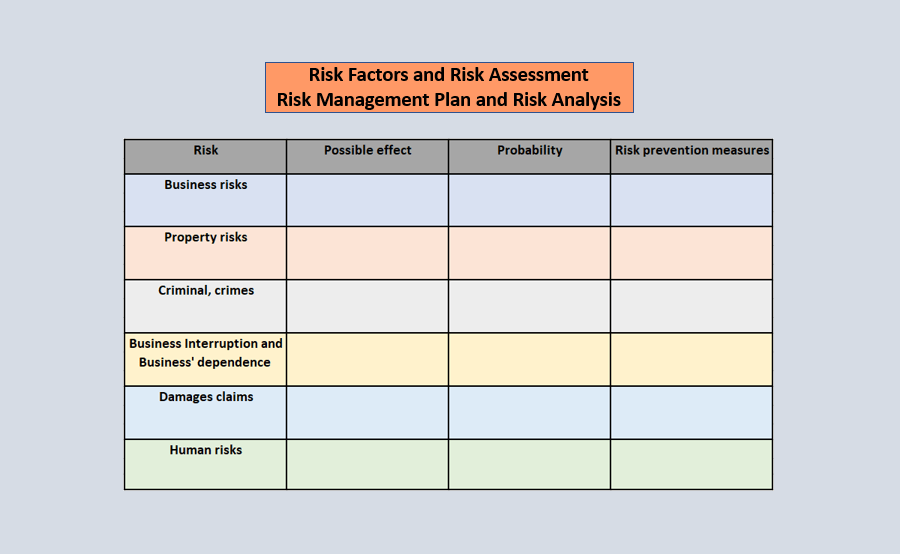
Business risks
- economic:
cost-effectiveness/ profitability of the company; competitors' activity; customer loans, guarantees - technical:
production, product development, technology delays in deliveries - political risks:
risks due to society problems, e.g. trade restrictions, international sanctions etc.
- economic:
-
Human risks
- disease, accident
- divorce, retirement, generation change etc.
-
Property risks and crimes
- fire, water damage, storm
- machine, tool, transport, equipment or traffic damage
- breaking, robbery, bomb threat, hooliganism
- data theft
-
Business Interruption and Business' dependence. The risk of dependency in business
- losses due to supplier activity
- losses due to customer damage
- losses due to infrastructure failure, for example electricity interruption, power failure
- authorities, state regulations dependence
-
Damages claims. Liability risks
- liability for damage caused to another
- liability risks: operational responsibility, e.g. the causal link between the damage and negligence, discovered mistakes, oversights in work, in process of production
- liability for damage caused by employee "specialist's responsibility"
- information responsibility and responsible contracts
- product liability, e.g. responsibility for the product safety
- environmental responsibility, e.g. environmental pollution caused by the manufacture activity
10 advices to avoid risks
- Take care of your company's key management personnel
- Make all agreements in written form
- Be prepared that not all things go as were planned
- Regularly check the business solvency of your business partners
- Maintain the good business relationships
- Learn about legislation and standards
- Take advantage of other services
- Comply with the contract provisions and meet the prescribed deadline, keep up with the schedules
- Work better than your competitors
- Protect your business information and expertise
Risk management policy
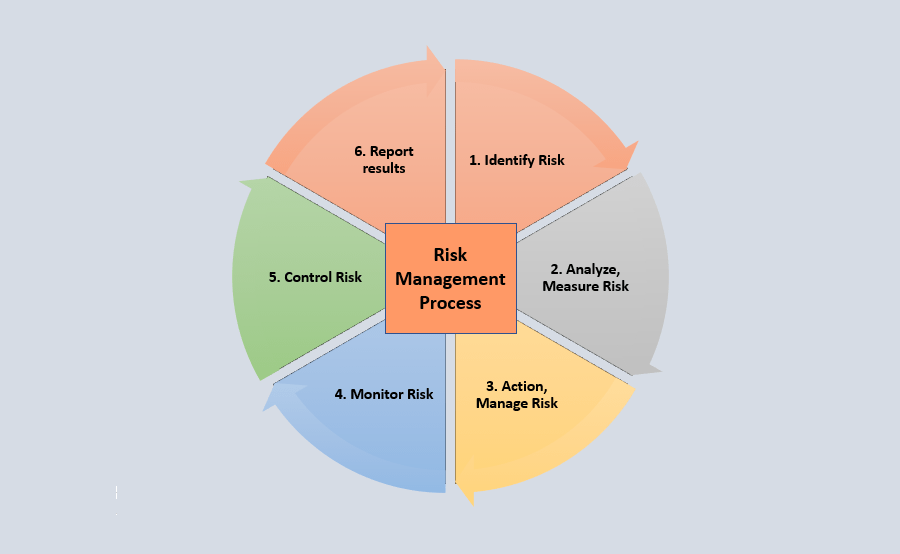
The objective of risk management policy is to reveal in time possible business risks, their prevention or minimization of the negative impact on the financial and operating activities of the company. A process by which a company tries to identify and control business risks. Today, risk management is a continuous and complex process for the company. This process includes:
- risk identification
- risk assessing and
- risk reducing steps
RISK MANAGEMENT RULES:
- Don't risk more than you can afford to lose!
- Do not take the great risk to gain small benefit!
- Consider different opportunities carefully!
Insurances for business. Checklist for the Entrepreneurs
Why you need business insurance coverage? In the history of almost every company there are a lot of risk situations which can lead to financial losses or even to bankruptcy. The impact of any force majeure situation can be dramatic for small enterprises. There are situations when it seems that everything is lost due to fire, robbery or irresponsible contractors. However, if an entrepreneur has thought about such cases in advance, insurance can help. Business insurance helps to save your capital and continue run a business without fear of financial loss. What are the different types of insurance for businesses? There are a lot of different insurances available on the market and which protect against financial loss.
The entrepreneur must understand the risks the company’s business involves and all of your employees should be insured in compliance with the legal requirements. Check out the below insurance types and checklist to protect your business from financial loss!
Individual insurance / entrepreneur’s personal insurance / private trader insurance
There are mandatory and voluntary insurance policies / coverage:
Mandatory (statutory)
1. In case you hire employees for your company, you should pay the social insurance contributions. Statutory social insurance contributions (general social security insurance) in Finland are the following:- Earnings-related pension insurance contribution (TyEL)
- Social and health insurance contribution
- Unemployment insurance contribution
- Occupational accident and disease insurance contribution
- Employees’ group life insurance contributions
- More information on vero.fi
2. Insurance for private traders: Self-employed persons’ pension insurance or YEL, which will help you in case of illness, disability or parental leave, for instance. YEL is an abbreviation of Yrittäjän eläkelaki, which means Self-employed Persons’ Pension Act 22.12.2006/1272. This is an insurance for self-employed persons aged 18 to 67 in case of business activities last for at least 4 months. With YEL insurance in accordance with this law, an entrepreneur should be insured against old age, disability and death. The insurance also includes a family pension, which provides security for the entrepreneur's relatives. You can calculate the size of your social security benefits and estimate the size of your insurance contributions using, for instance, the YEL calculator by VARMA.
Voluntary:
- Life insurance;
- Self-employed persons' / entrepreneur's accident insurance
- Voluntary pension insurance
- Business travel insurance/ corporate travel insurance
- Leisure-time accident insurance
- Insurance for business interruption due to entrepreneur's disability
- Property insurance for private traders or corporate property insurance
- Business liability insurance and product liability insurance, that can protect you in case of your business activities cause bodily injury or material damage
- Corporate medical expenses insurance
- Corporate legal expenses insurance etc.
Property insurance and business insurance:
- Water leakage & fire damage, burglary, theft etc.
- Construction and installation insurance
- Machine breakdown insurance
- Motor vehicle insurance
- Marine & transport insurance
- Transportation insurance
- Cargo insurance
- Business interruption insurance
- Business liability insurance
- Credit insurance etc.
Business plan section: Risk factors and Risk survey. Insurance
The following tips can help to prepare business plan, define business strategy and achieve goals:
- Make a risk survey for your business and create a risk analysis that will form the risk management plan. Use the table "Risk factors, assessment and analysis".
- Create a summary of the insurances your business may need. Carefully consider and evaluate company's insurance coverage needs based on potential risks.
- Use as a basis a risk management action plan and add the necessary insurance as a protecting measure.